Dr Craig Knight: How Plants Make Us More Productive
:format(webp))
:format(webp))
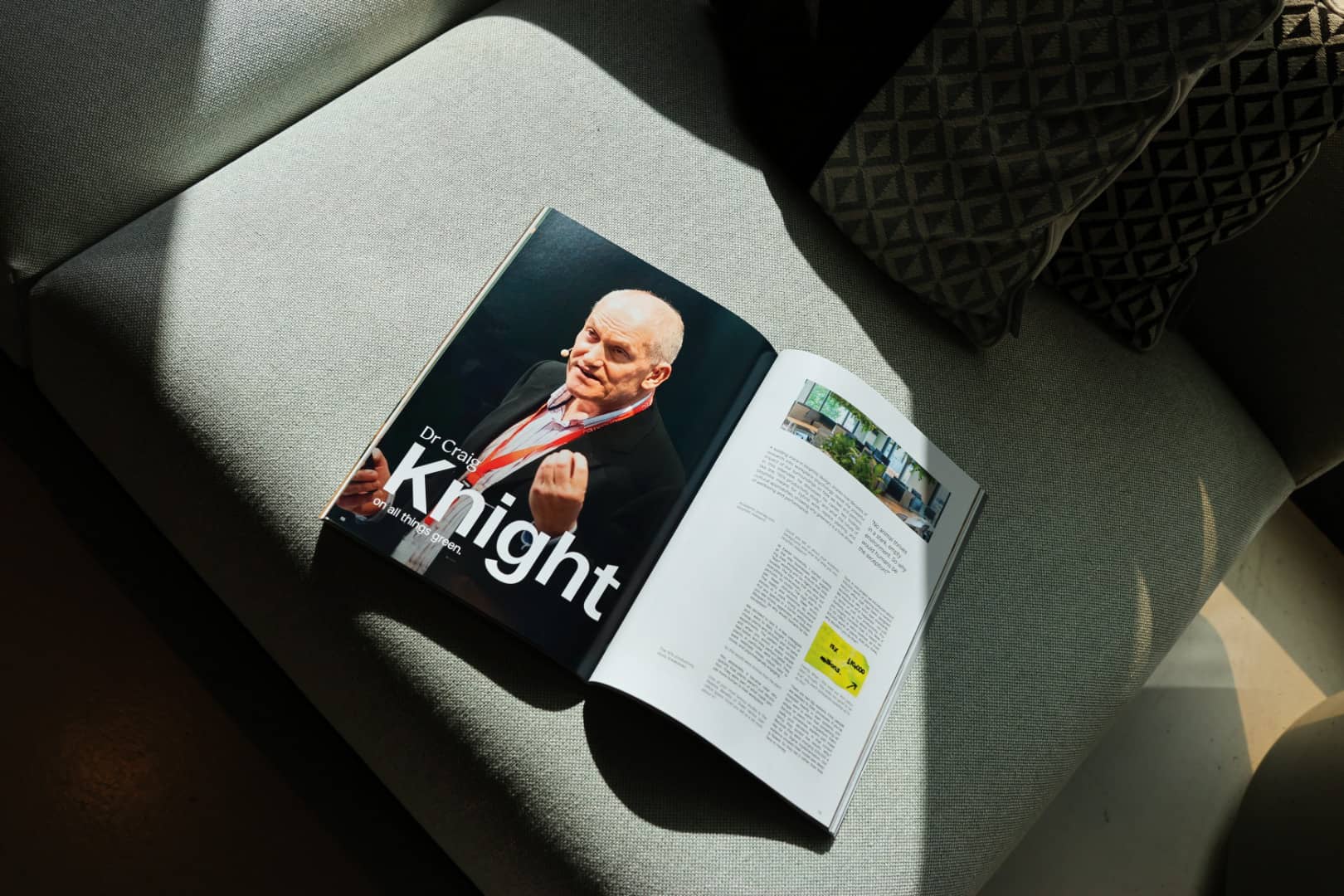
As part of our Greenhaus 01 series, where we revisit standout conversations from our biophilic design magazine, GreenHaus, we return to our interview with workplace psychologist and researcher Dr. Craig Knight.
Introduction: Dr Craig Knight
During his PhD research at the University of Exeter, Dr. Knight conducted a landmark study that continues to influence how workplaces are designed today. His now-famous paper, The Relative Benefits of Green Versus Lean Office Space: Three Field Experiments, co-authored alongside Nieuwenhuis, M., Postmes, T., and Haslam, S., found that introducing plants into office environments could improve workplace productivity by up to 15%.
For us, that research forms the foundation of our planting 'Return on Investment' calculator, helping businesses understand the measurable impact workplace planting can have on wellbeing, engagement, and performance.
Alongside discussions around hybrid working, sensory design, and replica planting, our conversation explored the science behind why greener, more human-centred spaces matter, not just aesthetically, but psychologically and commercially too.

The Science Behind Biophilic Workplace Design
Dr. Knight’s research began during the height of lean workplace design, when stripped-back offices, minimal decoration, and highly controlled environments were considered the pinnacle of efficiency: distraction-free spaces that would allow workers to reach peak productivity.
The reality, according to Dr. Knight, was very different.
“No animal thrives in a stark, empty environment. So why would humans be the exception?”
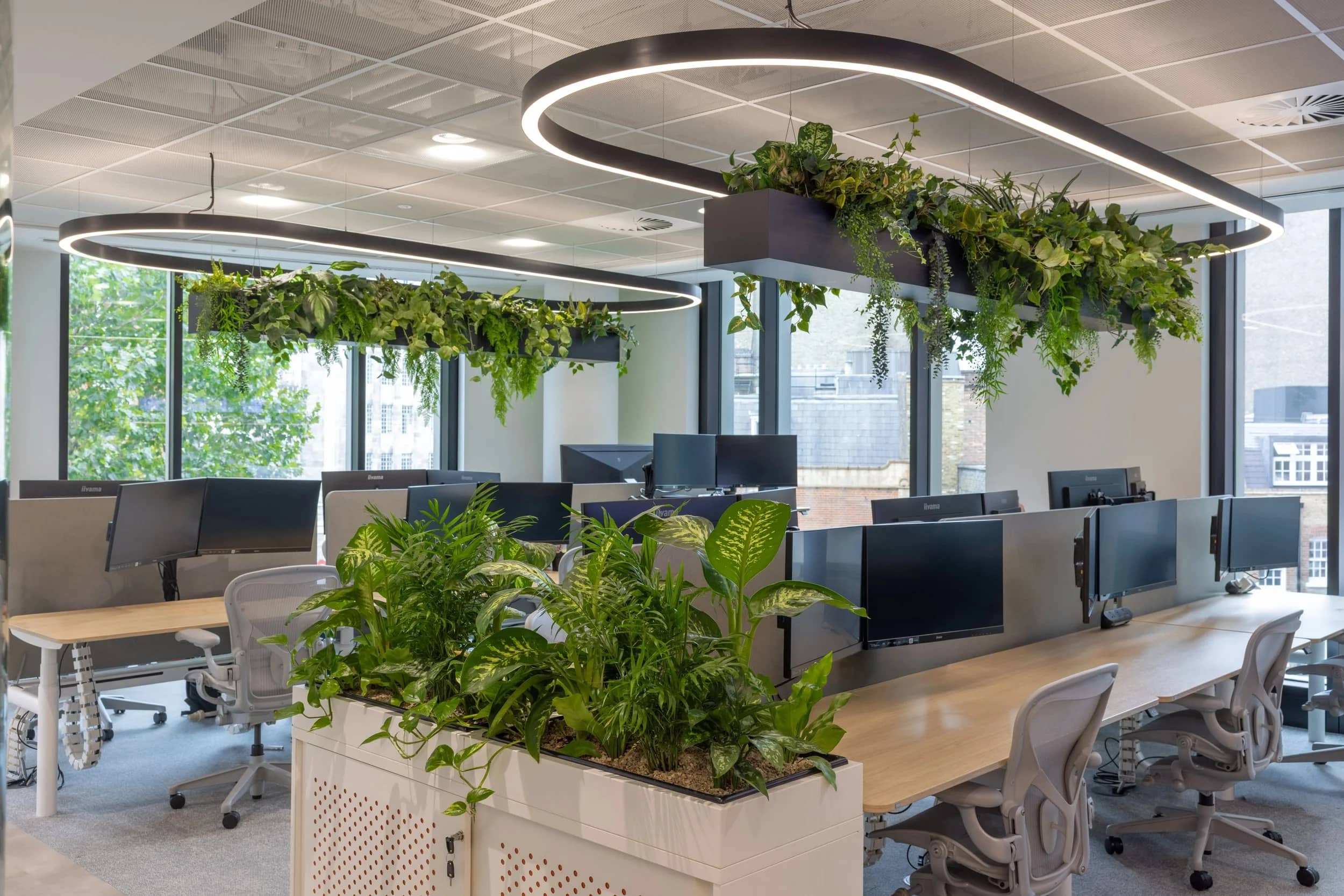
By introducing simple elements such as planting and artwork into otherwise ‘lean’ office environments, Dr. Knight and his colleagues observed clear improvements in both wellbeing and workplace performance. The findings helped establish what has since become one of the core principles of biophilic design: that people perform better in environments that feel natural, comfortable, and psychologically enriching.
Plants were found to be the most effective way of enriching a space. Cheap, easy to implement, and inherently engaging, they offered a practical way to transform workplace experience without major structural change.
The 15% Productivity Study and the Business Case for Plants
Through their experiments, they found some rather staggering results.
After introducing approximately £10,000 worth of planting, productivity increased by around 15%. When translated into commercial terms, the uplift represented millions of pounds in additional revenue potential. This revealed just how crucial a supportive, enriching office environment can be for productivity.
Too often, businesses view workplace design as an aesthetic consideration rather than a performance tool. Yet the evidence consistently suggests that wellbeing, engagement, and productivity are deeply connected.
Importantly, Dr. Knight also emphasises that productivity must be measured properly. Rather than relying on vague perceptions, his research breaks roles down into measurable tasks such as accuracy, speed, information processing, and concentration. Once those factors are isolated, the effects of environmental enrichment become far easier to quantify.
Beyond Planting: Sensory Design and Human Experience
Although plants sit at the centre of much of Dr. Knight’s work, the conversation around workplace enrichment extends far beyond just our green friends. Lighting, artwork, fragrance, and personal ownership of space all influence how people experience an environment. Together, these elements shape whether a workplace feels clinical and transactional, or supportive and human.
One example discussed during our conversation involved a Belgian hospital where introducing lavender fragrance improved not only patient wellbeing, but also perceptions of quality and value throughout the space.
Plants are particularly powerful because they are living systems. They grow, change, and create a sense of connection that static objects cannot easily replicate. Dr. Knight also notes that engagement becomes even stronger when people feel a sense of ownership over the planting around them. This idea continues to shape modern thinking around biophilic office design.
Hybrid Working, Replica Plants, and the Future of Workplace Design
Our conversation with Craig also explored how workplace expectations have shifted following the pandemic. To Dr. Knight, hybrid working represents an opportunity to rethink outdated assumptions around productivity and management. Rather than treating happiness and performance as opposing forces, his research suggests they are closely linked.
“We’ve never found a point where people are ‘too happy’ to be productive.”
As businesses compete to create environments people actively want to spend time in, factors such as comfort, wellbeing, and sensory experience are becoming increasingly important.
Even replica planting entered the discussion. Interestingly, Dr. Knight explained that artificial plants can still provide psychological benefits if people perceive them as real. The challenge for future research (that we hope to conduct!) is understanding whether high-quality replicas may still create meaningful wellbeing effects, particularly in spaces with limited natural light.
Designing Better Workplaces Through Biophilia
The overwhelming takeaway from our conversation with Dr. Knight was that biophilic design is not so much a ‘nice to have’, but a must-have. How much productivity could businesses be missing out on? And could that lost productivity become the edge surrendered to competitors?
Planting, natural materials, sensory enrichment, and human-centred environments all contribute to workplaces that are healthier, more engaging, and more productive. And while the science behind it may be complex, the practical starting point is often surprisingly simple.
Introduce greenery. Create environments people enjoy spending time in. Design spaces around human needs rather than purely operational efficiency.
As Dr. Knight puts it, plants offer “extraordinary bang for your buck.”
To explore Dr. Craig Knight’s insights in full, including his research into workplace productivity, hybrid working, and environmental psychology, you can read the complete interview on the Greenhaus website, or explore Plant Plan’s ROI calculator to understand the measurable business impact of workplace planting.
You can also get in touch with us, to learn how we can help make your space more productive by heading over to our contact page.
:format(webp))