Growing Connections with the Founder of Visionary Farms
:format(webp))
:format(webp))
As part of our Greenhaus 01 series, we spotlight articles and interviews from our industry leading biophilic magazine, GreenHaus. Here, we revisit our conversation with Elena Boos, founder of Visionary Farms.
This is an overview of the topics covered in our interview. If you would like to read it in full, head to the greenhaus website.
Introduction: Elena Boos
Elena’s work sits at the intersection of planting, technology, and human experience.
With a background in vertical farming and a deep understanding of environmental systems, she is redefining how planting is used within commercial spaces. Not as a static design feature, but as something dynamic that encourages connection and care.
Through Visionary Farms, Elena is helping to shape a new approach to indoor planting.
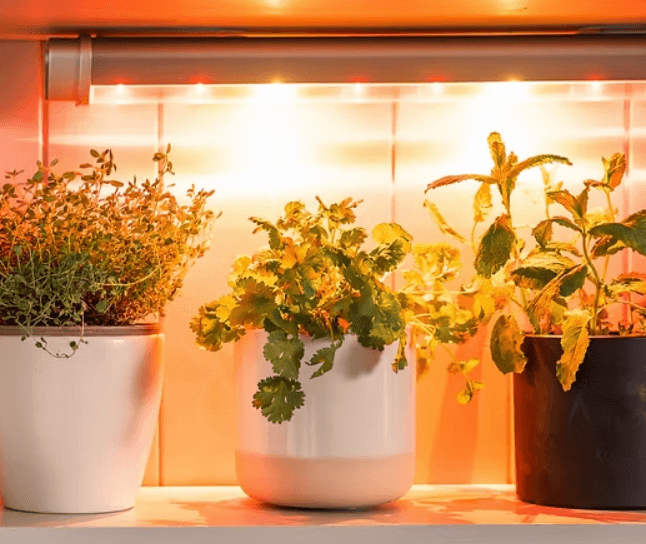
Rethinking Indoor Planting: From Decoration to Interaction
Workplace planting follows a consistent structure. Design a scheme, install it, and maintain the plants within it. Visually appealing? Yes. Interactive? Not so much.
Visionary Farms challenges this by introducing planting where interaction is encouraged.
They introduce edible species, and encourage sensory interaction, inviting touch, smell, and participation. Far from being passive installations designed to fade into the background, these are plants that aim to be a spaces focal point.
At the core of this thinking is Elena’s background in vertical farming. By growing plants in controlled indoor environments, often stacked to maximise space, vertical farming creates optimal conditions for year-round growth.
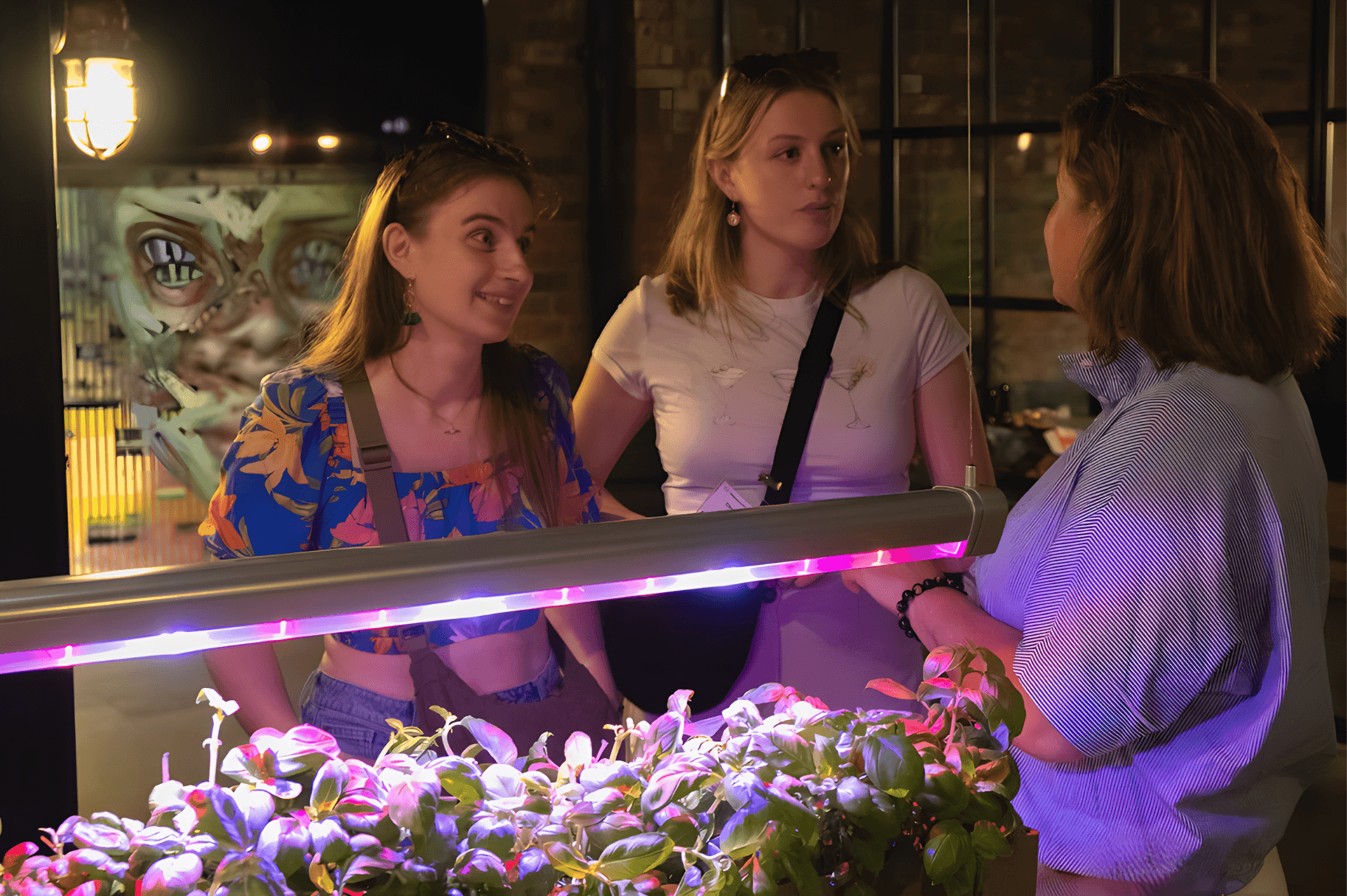
Creating Connected Workplaces Through Planting
Where Visionary Farms stands apart is in how it applies this 'vertical farming' approach in working environments.
Planting becomes something shared. In one project, a co-working space introduced an indoor herb garden where teams decide what to grow, harvest together, and use it socially at the end of each month. These kinds of interventions transform planting from a background feature into part of workplace culture.
A key element of Elena’s approach is to simplify the plant-care process. By combining energy-efficient lighting, environmental sensors, and a digital platform, Visionary Farms creates stable, manageable growing conditions indoors. So that responsibility for plant care is easily managed throughout the team.
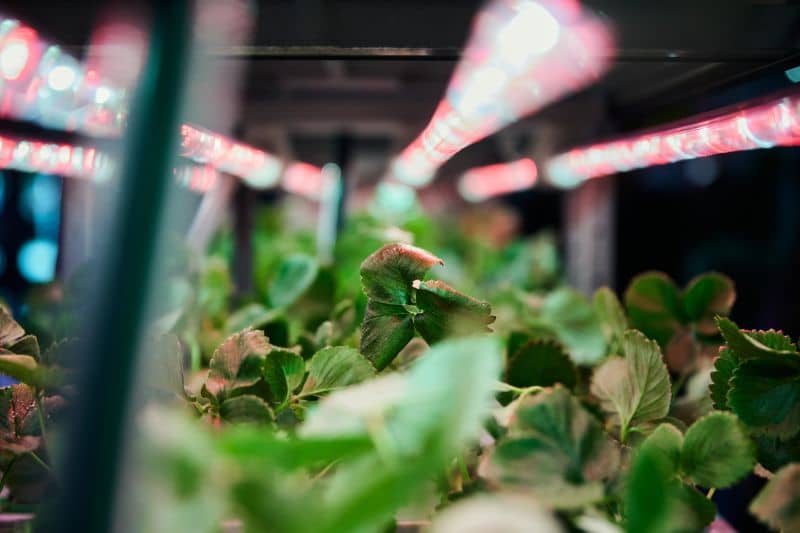
Lighting, in particular, plays a critical role. By adjusting intensity and spectrum to suit different plants and growth stages, the system improves plant health while reducing energy use. The result is planting that is not only more engaging, but also more practical.
Designing for Longevity and Everyday Impact
One of the most overlooked challenges in commercial planting is long-term success. Plants placed in unsuitable conditions may survive initially, but gradually decline.
Elena’s approach focuses on creating stable environments from the outset. By monitoring factors such as light, temperature, and air quality, potential issues can be identified early, ensuring planting continues to thrive over time.
Despite the technology behind her work, Elena’s advice is simple: Start small and focus on intention.
A shared herb garden, a small interactive feature, or carefully chosen planting can begin to change how people experience a space.
To explore Elena Boos’ full interview and learn more about how technology is shaping indoor planting, visit the Greenhaus website.
:format(webp))