What are the signs your plant isn’t getting enough light
:format(webp))
:format(webp))
:format(webp))
Key Takeaways
Plants tell you what they need Plants are pretty good at telling us what they need - slow growth, leggy stems, or wet soil are all messages for you to read!
Increase light gradually If you do suspect that a plant isn’t getting enough light, it’s important to increase its exposure gradually, rather than shocking it with a sudden move into scorching sunlight.
A clean leaf is a good leaf! One of the quickest solutions is to make sure you are dusting or wiping your plants leaves when you water and prune.
Introduction: Why do plants need light? And how can we tell if they aren't getting enough?
Plants need light just as much as we humans need food.
It is the driving force behind photosynthesis; the process plants use to produce energy, and put simply, is a plants food source. Without it, no plant can survive (seriously, no light = no plants...)
The challenge is that providing enough light in modern workplaces isn’t always easy. Natural daylight is often limited, due to the differing regulations for offices and homes. In particularly large offices, desks and planting schemes can sit a long way from windows, making it even harder for them to get the food they need.
We’ve already explored some of the plant species that can tolerate lower light levels, but even the toughest shade-loving plants need some light to survive. So how do you know when they’re not getting enough? What are the telltale signs that your little green friend is craving a little more of the glowing good stuff?
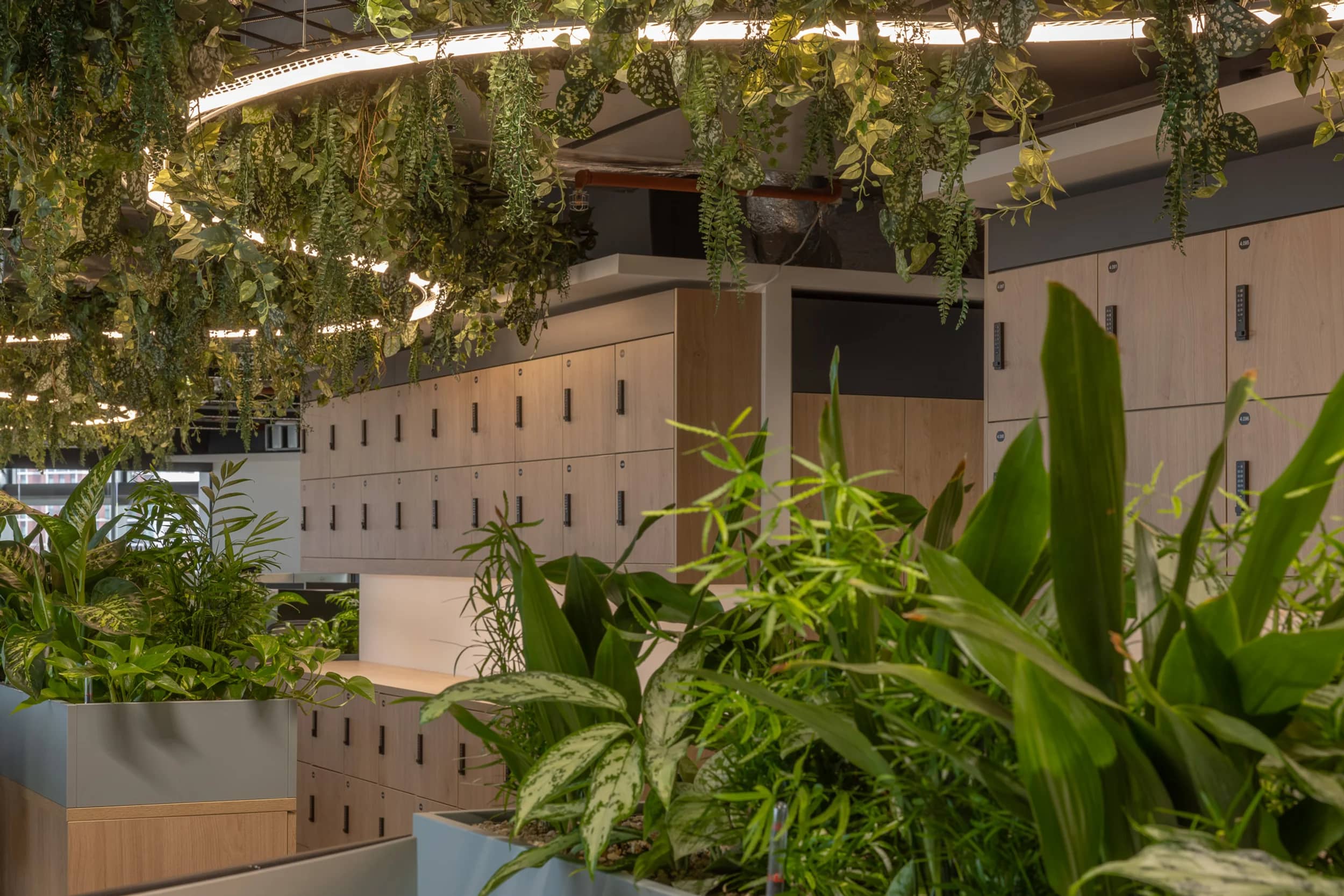
Plants powered by artificial lighting at SharkNinja's HQ
Leggy growth
One of the clearest signs that a plant is not getting enough light is long, stretched-out growth. This is often called "leggy" growth, and it is especially easy to spot in plants such as Satin pothos or schefflera, where new leaves and nodes appear along the stem.
If the gaps between these leaves are becoming unusually large, it usually means the plant is stretching itself towards the nearest light source. Many of these plants evolved in dense rainforest environments, where light was something to be searched for. They do not want to waste energy growing leaves in places where those leaves will not be able to capture much sunlight. So instead, they grow longer stems, produce leaves less frequently, and do their best to reach the glow.
Stunted or slowed growth
This one might sound a little obvious, but if a plant is without its main source of energy, it is naturally going to slow down its growth.
There is a little bit of science behind this. Plants produce hormones called auxins in their growing tips. These hormones help direct growth towards available light, encouraging cells to elongate and push the plant in the right direction. When light levels are low, that process slows down. The plant simply doesn’t have the signals, or the energy, to keep growing at the same rate.
The biology is interesting, but the TL;DR version is much simpler.
If you suspect your plant isn’t getting enough light, you’re watering it correctly, feeding it correctly, pruning it when needed, and it still seems to be doing absolutely nothing, then hey presto… it’s probably not getting enough light. Simple…
Smaller leaves on the plant
Much like slowed stem growth, smaller leaves can be another sign that your plant isn’t getting enough light. Leaves are effectively the plant’s solar panels, capturing light and turning it into energy. If a plant senses that light is in short supply, it becomes a little more cautious about investing energy into producing them.
After all, why spend valuable resources growing large leaves if there’s not enough light around for them to do their job?
If you notice that new leaves are emerging smaller than older ones, or look underdeveloped compared to what the plant would normally produce, it could be a sign that your plant is struggling with the light levels it is receiving.
Faded colours, and the loss of variegation
Variegation is the term used to describe the streaks, patches, and patterns of different colours that appear on a plant’s leaves. For example, an Aglaonema Maria typically has lighter markings running through the centre of each leaf, giving it much of its visual appeal.
The problem is that those lighter sections contain less chlorophyll than the green parts of the leaf. Chlorophyll is what plants use to capture light and turn it into energy. So, when light becomes scarce, plants can sometimes respond by producing greener leaves in an attempt to maximise the amount of chlorophyll available.
In simple terms, the plant is trying to become more efficient.
If a variegated plant starts producing solid green leaves, or the colours and patterns seem less vibrant than they once were, it can be a sign that the plant is struggling to get enough light. It’s essentially sacrificing a little style in favour of survival.
If those beautiful streaks have started to disappear, you can bet your plant is asking for a little more sunshine.
The soil around the plant remains wet after watering
This can be a tricky one to spot, as there are plenty of reasons why a plant’s soil might seem overly wet. Overwatering, poor drainage, unsuitable soil composition, or even a particularly damp environment can all leave moisture lingering around the roots for longer than it should.
But if you’ve ruled out all of the usual suspects, a lack of light could be the cause.
Plants draw water from the soil to support growth and photosynthesis. If there isn’t enough light available, growth slows down, and so does the plant’s demand for water. As a result, moisture can sit in the soil for much longer than expected.
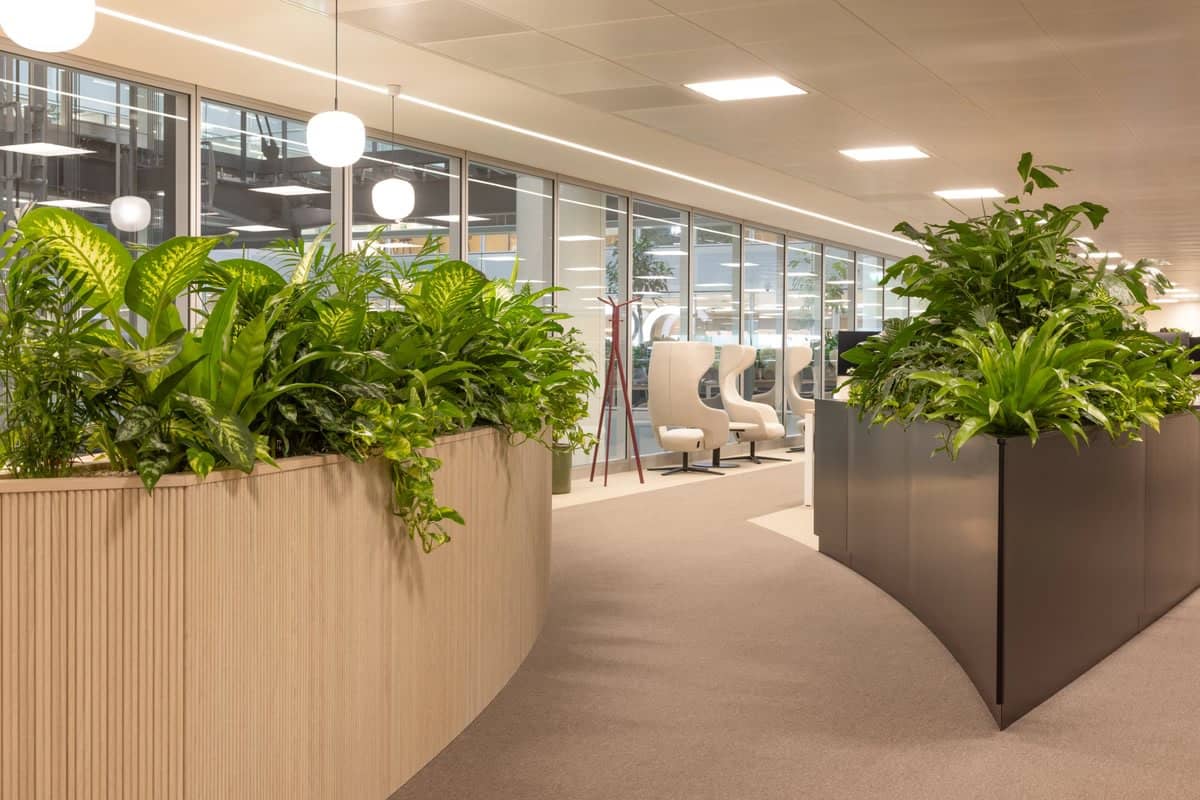
At SRG's HQ, a lot of the planting benefits from a balance of natural and artificial light
How to fix a plant that is not receiving enough light.
Okay, this seems like a simple one, right? Just chuck your plant into the brightest spot you can find and call it a day...
Unfortunately, it isn’t always quite that straightforward.
Plants can become accustomed to lower light conditions over time. If they’ve spent months adapting to a dim corner, suddenly moving them into bright, direct sunlight can come as a bit of a shock. In some cases, the leaves can scorch, discolour, or become damaged because the plant simply isn’t prepared for such a dramatic change.
There is also the practical challenge of finding a brighter location in the first place. Offices, homes, and commercial spaces aren’t always blessed with an abundance of natural light. In fact, there may be a very good reason the plant ended up in that darker spot to begin with.
The good news is that there are ways to improve the situation without turning your poor plant’s world upside down.
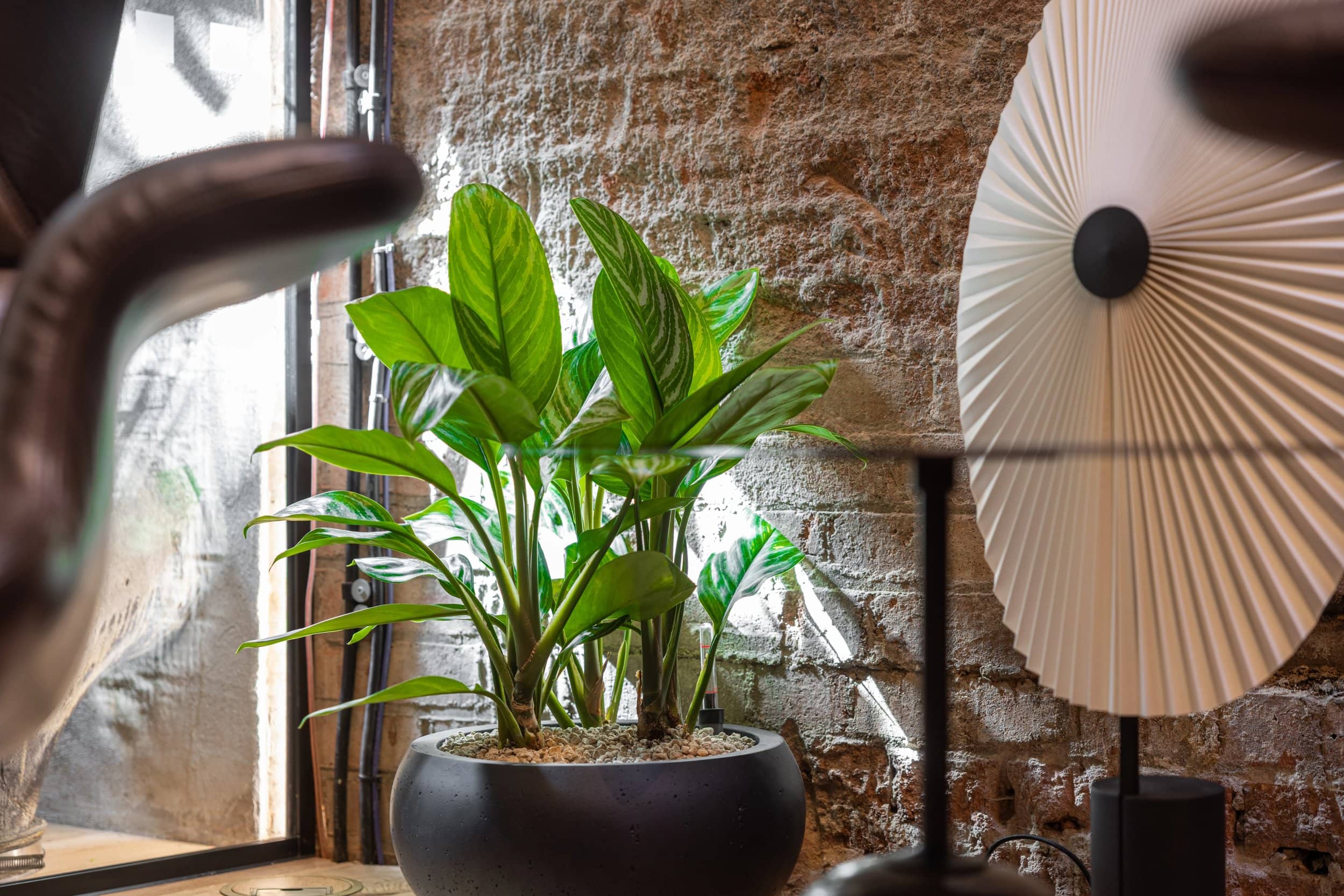
Here is a Aglaonema in glorious dappled sunlight at Accrete's HQ!
Move the plant gradually into an area with more light.
Some plants absolutely hate direct sunlight. Many popular indoor species evolved on shaded rainforest floors, protected by dense canopies overhead. Expose them to too much sun too quickly, and you can end up with scorched, burnt leaves rather than healthy new growth.
If brighter conditions are available, try moving your plant gradually. Give it time to adjust, slowly introducing it to higher light levels rather than throwing it in at the deep end.
Bring in more artificial light
In spaces where more natural light simply isn’t available, artificial lighting can be an excellent solution.
Grow light technology has come a long way in recent years. Modern systems are more energy efficient than ever and are designed to provide the specific wavelengths plants need for photosynthesis. In other words, they deliver exactly the kind of light your plant is looking for, helping to stimulate healthy growth without relying on the sun.
Clean the leaves
This one might sound a little silly, but it can make a surprising difference.
Over time, dust naturally builds up on the leaves of indoor plants. That layer of dust acts as a barrier, reducing the amount of light that reaches the leaf surface and limiting the plant’s ability to photosynthesise effectively.
Giving your plant’s leaves a regular clean can have a significant impact on how much light it is able to absorb. It’s a simple job, but one that many people overlook. In fact, it’s something our plant maintenance technicians do on every visit.
As a general rule, if you’re watering your plant, it’s worth giving the leaves a quick clean too.
Conclusion
Light is a plant’s fuel source. Without enough of it, even the toughest indoor species will eventually begin to struggle. Fortunately, plants are usually pretty good at telling us when something isn’t right. Whether it’s stretched stems, smaller leaves, fading variegation, slowed growth, or soil that never seems to dry out, the signs are often there if you know what to look for.
The good news is that most lighting issues can be corrected. A brighter position, a carefully chosen grow light, or even something as simple as cleaning dusty leaves can make a real difference. Pay attention to the signals your plant is giving you, and you’ll be well on your way to a healthier, happier little green companion.
If you need any support in maintaining your office plants, then you can fill iout the form below! We provide plant rental, plant installation and maintenance for offices all across the UK.
FAQs - Signs a plant isn't getting enough light, and what to do about it.
Common signs include leggy growth (where this is a big gap between leaves) or stunted growth, faded colour variations, smaller leaves than usual, and the soil remaining wet for longer than usual after watering.
Long gaps between leaves - described as 'leggy growth' is a sign that the plant is reaching for light, rather than spending energy on growing leaves where it is dark.
If everything else has been controlled for, it could be that your plant isn't getting enough light.Light is a plants food source, and without it (much like you) the plant cannot grow
Assuming everything else is accounted for (unrestricted roots, sufficient watering, and proper nutrient rich soil) then your plant isn't getting enough light.
Variegation is caused by areas of a leaf containing less chlorophyll than the surrounding green tissue. When a plant isn’t receiving enough light, it will often produce greener leaves to maximise its chlorophyll levels and improve its ability to capture light. In short - because your plant needs more light!
Yes. Plants growing in low light are not able to grow as their main energy source (light) is depleted. This means they don't take up water to grow, leaving the soil wet.
Not immediately. If a plant has begun growing in order to maximise light, too much at once may shock it and scorch the leaves. If you suspect a plant isn't getting enough light, increase light levels gradually, rather than all at once.
Yes! This is a really important part of plant maintenance that people miss. Regular cleaning helps maximise light intake.
No. Every plant needs at least some light. Lower light plants might be well adapted to living in shady conditions, but even they need some light, else they will stop growing, and eventually die!
Get in touch with our team to see how we can help your business.
:format(webp))
How to get rid of gnats or flies in office plants
Discover why flies appear in indoor plants and how to keep them away. From understanding what attracts them to expert strategies like proper watering, pest control, and innovative substrates, this guide covers everything you need to know to maintain healthy, fly-free office plants.
:format(webp))
What are the signs your plant isn’t getting enough light
Wondering if your plant needs more light? Our plant expert Amy helped us explore the signs that a plant is experiencing low light stress, like leggy growth, small leaves, fading variegation, and slow growth, plus some practical ways to fix it!