Plant Power: How Plants Can Support Mental Wellbeing and Help Ease Symptoms of Depression
:format(webp))
:format(webp))
Key Takeaways
Plants are a support, not a solution Plants can help reduce stress and support mental wellbeing, but work best alongside other forms of care.
Our surroundings influence how we feel The spaces we spend time in shape our mood more than we often realise.
Small changes can make a real difference You do not need to start big. A few well-chosen, well-cared-for plants can support wellbeing over time .
Plants: Creating supportive spaces
There is no one size fits all solution to maintain your mental wellbeing. We are all shaped by different emotions, experiences and lifestyles, and the way we feel, in reaction to our day to day lives is influenced by countless small factors.
Our environment plays a bigger role in this than we often realise, from the length of our commute to the amount of natural light we might feel reaching our skin throughout the day. Plants may seem like a small detail within that wider picture, but they can have a real, meaningful impact on our wider wellbeing.
If our surroundings are a central influence on how we feel, filling them with greenery is a natural place to start.
The history of greenery as a health benefit
While the integration of lush planting into homes and workplaces may feel like a modern trend, plants have played a central role in human life for thousands of years, across cultures and continents.
Ideas we now associate with biophilic design can be traced back centuries. In ancient Rome, the first century BC ‘ Villa of Livia’ featured immersive garden murals that enveloped interior spaces in scenes of abundant nature, reflecting an early understanding of nature as restorative rather than purely decorative.
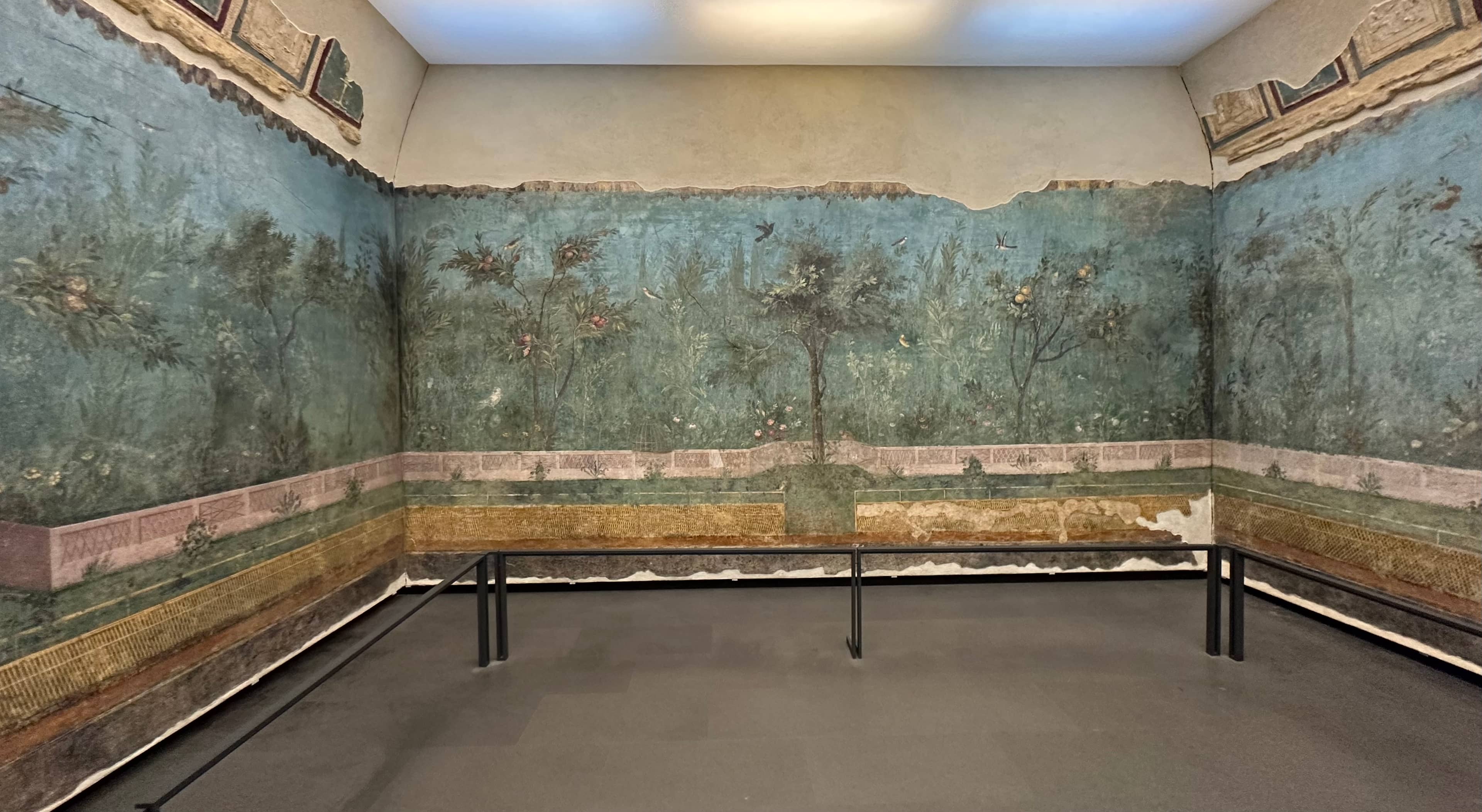
The Villa of Livia - early biophilia designed for wellbeing.
Similarly, the Japanese practice of Shinrin-yoku, or forest bathing, formalised the long-held belief that time spent in natural environments supports human wellbeing. Rooted in spiritual traditions that emphasise harmony with nature, it has since been supported by modern research linking nature exposure with reduced stress and improved mental health.
Together, these examples show that our connection to nature is neither new nor culturally specific, but part of a long-standing human instinct to seek wellbeing through the natural world.
What the science tells us about plants, mental health, and depression
We often feel that plants make spaces feel better, but there is science behind that feeling too. Large studies and reviews consistently show that people who spend more time around greenery tend to report fewer depressive symptoms and a lower risk of depression. Research led by Dr Margarett Burchett at the University of Sydney also suggests that planted environments can reduce feelings of dejection and depression by up to 58%, which is a striking result.
Actively caring for plants can make a difference as well. Gardening and plant care are linked with improved mood and reduced symptoms of depression and anxiety. This is likely because they bring together gentle movement, routine, focus, and a simple sense of care and achievement

Dr. Margaret Burchett - one of the leading researchers into how plants benefit our mental health.
In terms of indoor planting specifically, research suggests that plants can help reduce stress and support emotional balance by making spaces feel calmer and more comfortable. As stress and emotional strain are closely linked to depression, this kind of everyday environmental support can play an important role in longer term mental wellbeing.
Seen in this way, plants become part of a wider wellbeing toolkit. By shaping how we experience our surroundings, they can gently support mental health, much like getting enough rest, staying active, or eating well.
The benefits of plants in shared and working spaces
In addition to the supportive benefits plants bring to our individual environments, are there benefits in shared spaces.
When we bring greenery into shared and working spaces, research shows it can support mental wellbeing, while also making the spaces feel more welcoming, human, and balanced. Field studies of offices with added plants find that workers perceive their spaces as more attractive and satisfying , with fewer complaints about dry air and a stronger sense of privacy and comfort after plants are introduced.
Greenery in the workplace has also been linked with reduced stress and anxiety , a calmer atmosphere, and improvements in focus and engagement thanks to the restorative effects of natural elements on attention and emotional state.
Importantly, plants work best as part of a broader culture of care. In working environments that are already built on wellbeing strategies, and community, plants enhance an already strong structure for mental wellbeing - employees also see them as an investment by management into themselves.
How can you bring plants into your environment?
First of all, take it easy! Introducing plants into a workplace does not need to be ambitious or complex to be effective – they are supposed to enhance your mental wellbeing, not put pressure on it.
Start with a small number of easy-to-maintain plants. That allows you to build confidence gradually, learning what works for your space and routines without adding pressure. Even a few well-placed plants can soften an environment, making it feel calmer and more welcoming.
As you become more comfortable, plants can be added thoughtfully in areas where people spend the most time, such as desks, meeting rooms, breakout spaces, or shared entrances. Choosing species that suit the available light and level of care is key, as healthy plants are far more supportive than those that struggle.
Alternatively, you can look to planting services like ours here at Plant Plan. We can help maintain your plants for you, as well as install them in whichever way works best for your office. We work with your office team to work out exactly what will best fit the environment, so that you have a beautiful planting scheme that brightens your office environment.

Plants as part of a wider mental health picture
By choosing to introduce and look after plants, we signal an intention to create spaces that are kinder and more nurturing.
We create places where people can feel more at ease and more supported in their day-to-day lives. Growth, after all, takes time. It requires patience, attention, and the right conditions.
In this way, plants become both a symbol and a practice of long-term wellbeing; a investment in ourselves. Bringing plants into our space encourages us to consider not just about how our spaces look, but how they feel, and how they might quietly support the people who move through them every day.
Conclusion
Bringing plants into your office does not need to be complicated, risky or expensive. With thoughtful choices, even first time buyers can create greener, calmer spaces that support wellbeing over time.
If the new year is about fresh starts and small positive changes, office plants are a gentle place to begin. Start small, choose well and let the plants do what they do best.
If you would like support with your office planting journey, you can get in touch with us, or explore our office planting services to learn more about how Plant Plan can help.
Here are some of the resources used for this peice: -
https://link.springer.com/article/10.1186/s40101-015-0060-8
https://www.sciencedirect.com/science/article/pii/S0272494409000413
https://www.sciencedirect.com/science/article/pii/S0091743508000042