The Real Impact of Office Plants: Inside a Landmark Dutch Study on Workplace Wellbeing
:format(webp))
:format(webp))
Key Takeaways
Plants increase workplace satisfaction participants felt their workplaces were more attractive, of higher value, and increased a sense of privacy and shielding.
Plants lead to better health Employees in planted offices reported fewer discomforts such as dry eyes, headaches and throat irritation, improving overall workday comfort.
Employees value planting Staff believed the plants enhanced the appearance of the workspace and contributed positively to their wellbeing.
Plants are not a silver bullet Systemic dissatisfaction or deeper psychological factors were not resolved by planting alone. They improve the environment, not the entire employee experience.
Bringing stronger science into greener offices: A Dutch study
Workers expect more from their workplaces than ever before. The grey, lifeless office cubicles that once ruled the working landscape have been (rightfully) phased out, and a new world of hot desking, hybrid working, work capsules have crept in to take its place…
Today’s workforce want working environments that feel healthier, more human, and most importantly, inspiring.
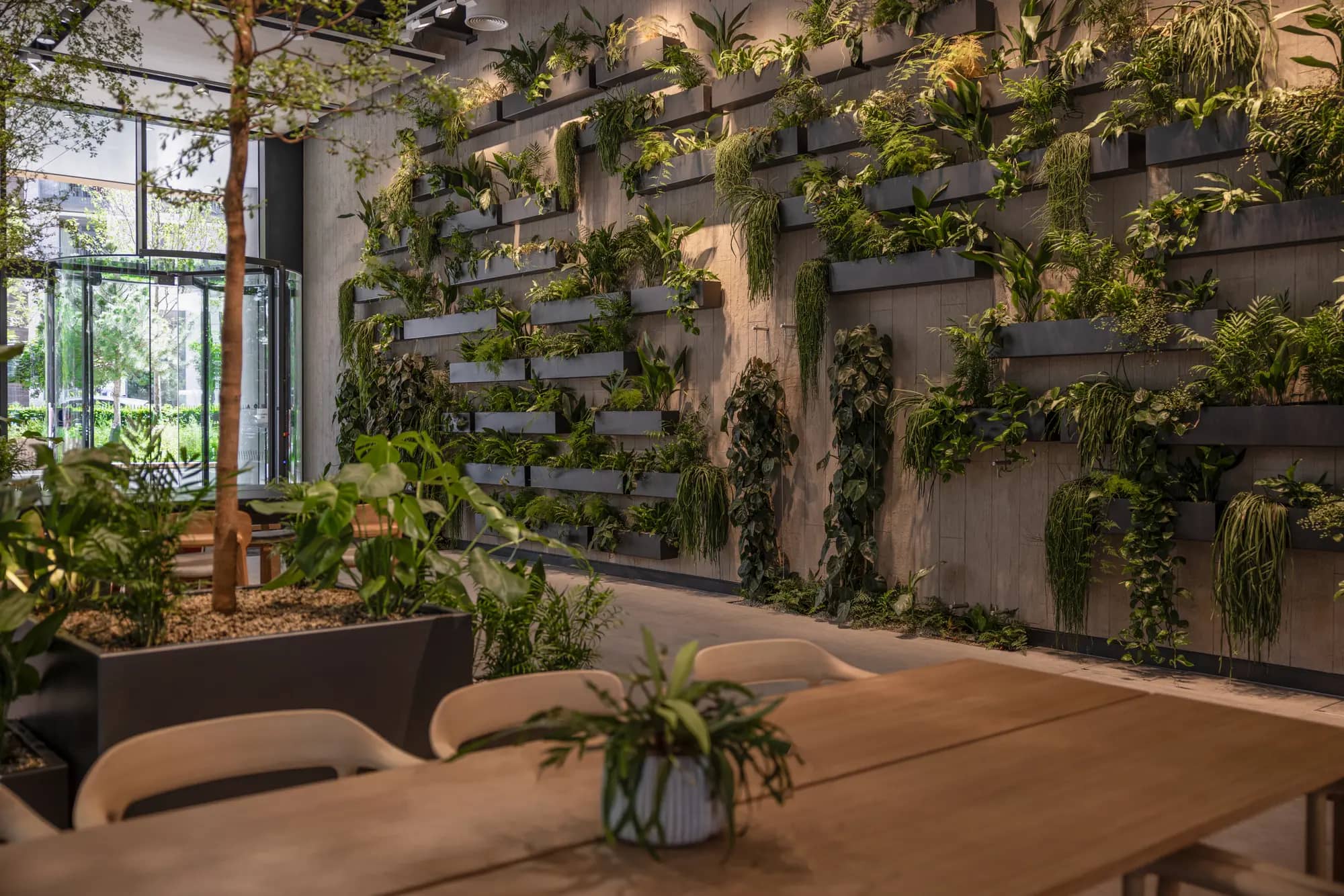
The Osmo building in Battersea is a stunning co-working space
Since the shift to hybrid working after Covid, the bar for what constitutes a ‘good workplace' has only risen. Companies now face growing pressure to create spaces that support wellbeing, productivity, and a genuine sense of connection. With this increased special investment, comes a need to prove its worth, which historically has been a tricky business, and a difficult thing to precisely describe.
Between 2019 and 2020, three Dutch researchers, Sjerp de Vries, Tia Hermans and Fransje Langers, set out to do just that.
They wanted to investigate the real impact of office plants across a variety of workplace settings, in as real a setting as possible, and over as long a time as possible. Their study explored the measurable benefits of introducing planting into office environments, including the potential productivity gains and whether plants genuinely improve how people feel and perform at work.
About the study: Real workplaces and real results
To really dig into the intricacies of this question, the researchers knew that a large-scale study was essential.
Whilst many researches had looked at isolated cases of workplace improvement, such as Dr Tøve Fjeld's study on plants effects on worker discomfort, or Kaplan and Kaplan's more holistic investigation into how plants help us restore mental clarity, few had looked quite as in-depth at the effect of plants on work outcomes, over a longer period of time.
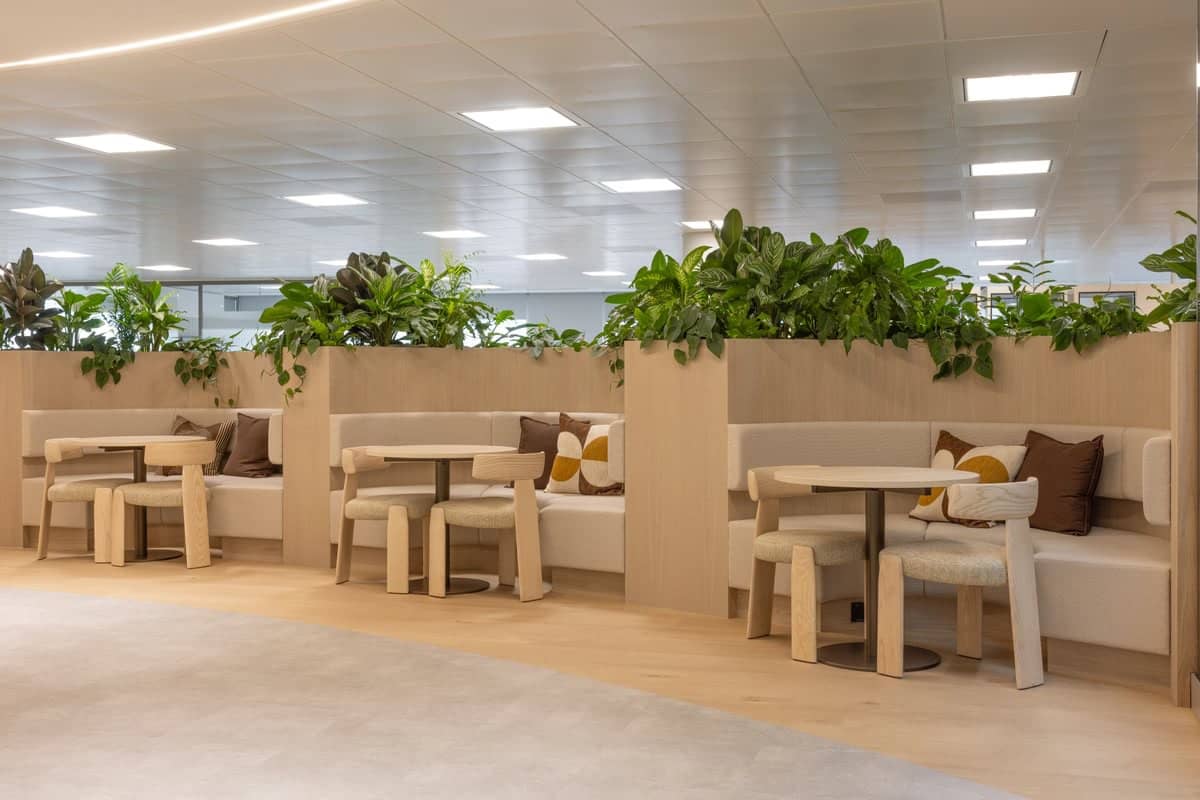
In order to gain a wider understanding of the macro effects of plants on a workplace, the researchers expanded their approach across nine separate Dutch organisations. Unlike short laboratory trials or self-reported surveys, this research observed everyday working life.
How the study was set up
Researchers partnered with nine organisations from different sectors.
Each organisation provided at least one intervention workspace (where plants were added) and one control workspace (which stayed unchanged).
These workspaces were real offices used by employees every day, not simulated environments.
This approach allowed the researchers to compare groups directly and measure whether plants made a difference in normal working conditions.
What the 'intervention' looked like
The goal was to test the measurable, physical and psychological impact of plants, so the planting schemes were carefully designed:
A substantial number of plants were added to intervention offices.
Species were chosen based on their proven ability to improve humidity, air quality and survive in office conditions.
Plants were placed where employees could easily see them to maximise the potential effect.
Professional maintenance was provided to keep plant quality consistent throughout the study.
This ensured the planting was not superficial. It was meaningful, visible and designed to alter the indoor climate in a measurable way.
What was measured
The study was very thorough, measuring both objective indoor climate factors and employee experience:
Indoor climate data (via sensors) – this meant recording temperature, relative humidity, CO2 levels, and concentrations of ‘Volatile organic compounds (VOCs)’
Employee factors (via repeated questionnaires) – they measured both qualitative and quantative, such as ‘perceptions of workspace comfort and complaints such as dry eyes, headaches, fatigue, as well as things like a asenteeism, and Overall mental health
This breadth of data gave researchers a full picture of how plants influence both environment and behaviour.
Measurements across these factors were then taken before the plants were in stalled, followed by two rounds of post installation measurements were taken over a period of at least four months.
The timing varied slightly due to Covid restrictions, but all participating offices had meaningful day to day exposure to the new planting. This long-term exposure matters. Many earlier studies only tracked effects over minutes or hours. This one tracked effects over months of real workdays.
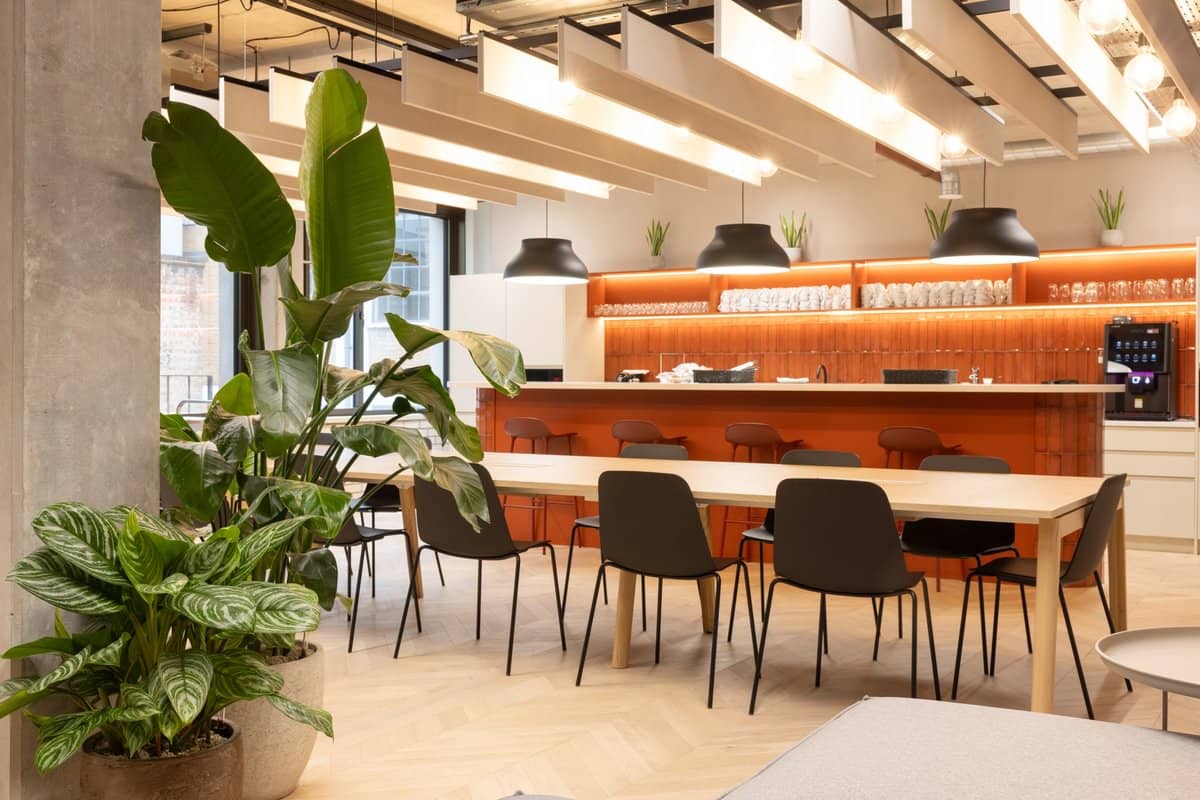
What the study found: Key proven benefits of office plants
Up until this point, most of the research on the benefits of plants in workplaces, whilst thorough, had been on a short-term scale. This study was different.
This time, they focussed on longer-term, in the field data, leading employers to better decision-making positions.
The Dutch field study revealed several clear, measurable improvements in offices where plants were introduced. These benefits occurred in everyday working conditions and lasted for months, making them highly relevant for modern workplace design.
Planted 'intervention' offices showed significant reductions in dry air complaints
Higher humidity helped reduce throat irritation, dry eyes and headaches
Higher ratings for workspace appearance
Employees rated planted offices as more visually appealing
The improvement was immediate and lasted for at least four months
The study found that Overall satisfaction with the workspace increaoed in the planted offices
• Especially relevant for employers encouraging hybrid or flexible working
Fewer employees reported health related complaints that worsened during the workday
Findings support the link between improved air moisture, wellbeing and daily comfort
These findings were significant for the biophilic design world. They showed that plants are a credible, evidence backed way to improve how people relate to their workspace. Beyond clear physical benefits, such as reducing discomfort linked to dry air, planting also contributed to a more positive view of the workspace overall.
What did not Change
The study also made it clear that plants are not a cure all. While they improved comfort, privacy and the overall look and feel of the workspace, they did not directly shift deeper psychological outcomes. Levels of stress, mood, broader mental health and job satisfaction remained largely unchanged, as did absenteeism. These factors are influenced by many elements of working life, including workload, management style and personal circumstances, and a planting scheme alone cannot override them.
What the study shows is that plants reliably enhance the environment, not the entire employee experience. They make spaces more pleasant and more comfortable, but they do not replace the need for a healthy culture or good organisational practices. In other words, plants are an important part of the picture, but not the whole picture, and understanding this helps employers build realistic, well rounded wellbeing strategies
What this means for workplace design and strategy
Workplaces have changed dramatically since COVID, and offices now have to compete with the comfort and ease of home. Employers face a new challenge. How do you create a space people genuinely want to return to?
From the study, we can see one clear method...plants!
When plants were introduced into real, functional offices, employees felt more satisfied with their workspace, experienced fewer physical irritations such as dry eyes or headaches, and felt more private and settled in open plan areas. Together these individual factors, lead to an office that fells more pleasant, comfortable, and ultimately more human. This has an incredible real world value for attendance, engagement and the everyday rhythm of work.
The study also shows that planting is most effective when it is intentional. Positioning greenery within sightlines, using it to soften open plan boundaries (creating areas of prospect and refuge) and choosing species that are both attractive and reliable ensures people feel the benefit. Plants become part of the design language, not an afterthought.
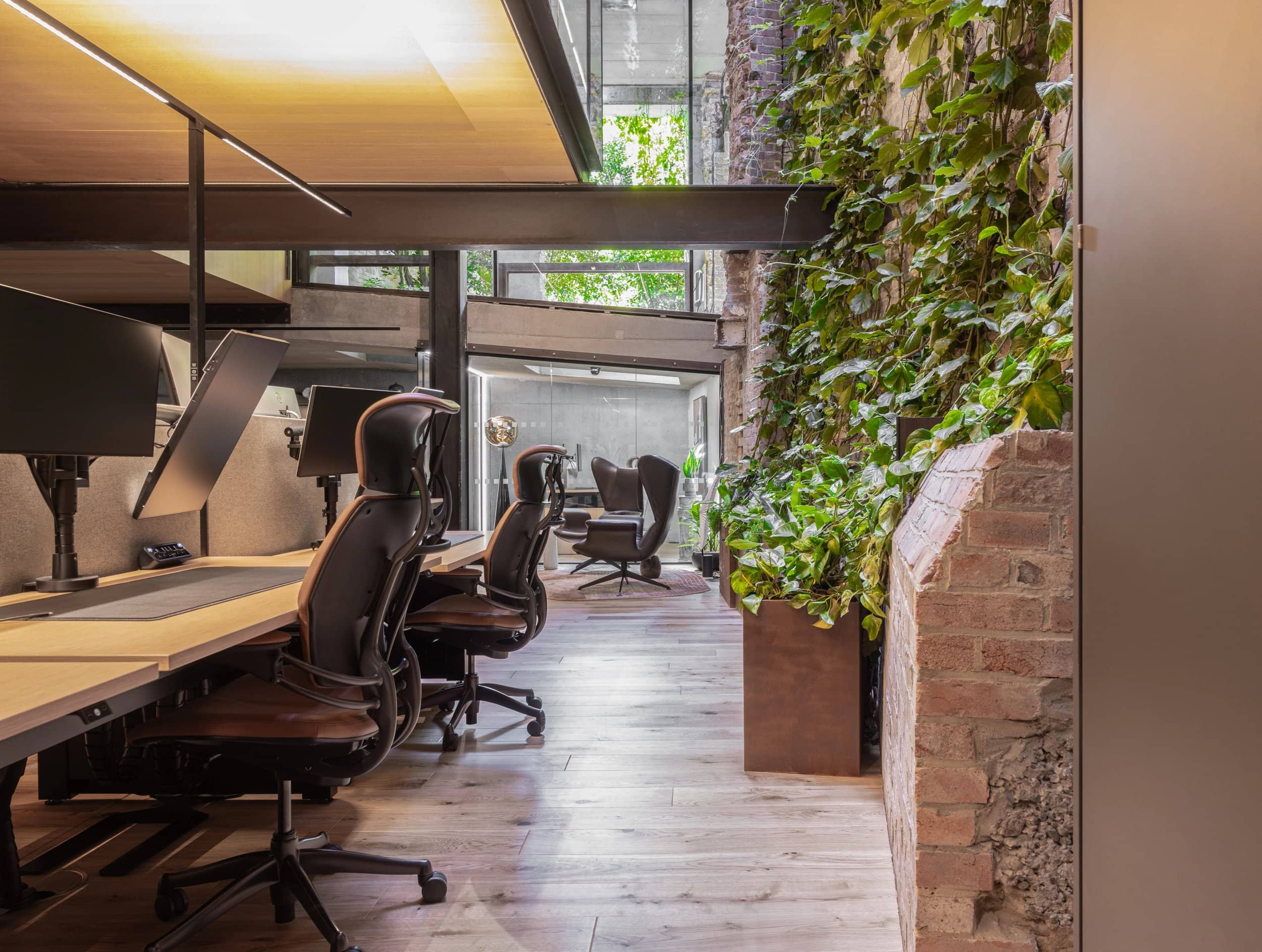
Conclusion: Plants create offices people want to work in
Okay, we get it...we're a little biased on this. Here at Plant Plan, we're in the business of putting stunning plants in amazing offices, so it figures that we like to draw this kind of a conclusion.
That being said, the science backs us up. Plants help people feel more connected to their workplace, and they create environments that feel safer, calmer and more cared for.
At the same time, we are transparent. Plants are not a cure all solution, or a silver bullet for bad work culture.
If you would like to learn more about the work that we do, take a look at our latest case studies. Or if you would like to have a chat with us, and see just how we can help you, wether by bringing plants into your office or hospitality space, educational environment or property portfolio, you can contact us here!
And if you would like to read the full study, you can read that here.
:format(webp))
:format(webp))
Unpacking the studies of Prof. Dr Tøve Fjeld
Professor Dr Tøve Fjeld conducted a series of fascinating studies in the 1990s that give us an incredible insight into the physical effects that plants have on humans. Across three different studies, in different locations, different times, different people, there are very similar, conclusive results that demonstrate just how powerful plants are.