The Power of Plants in the Hospitality World
:format(webp))
:format(webp))
Introduction
More than ever, hospitality environments are competing on much more than the quality of their food, or the price of their drinks...
Experience has become central to a venue’s success and is now a clear differentiator in an increasingly competitive, exciting, hospitality market.
To hospitality businesses, this differentiation is crucial: Every single additional minute a guest chooses to stay in a space has a measurable impact on that bottom line. To keep people through inside the doors, hospitality operators need to create environments that do more for guests than ever before. Beyond simply keeping guests comfortable and warm, experiences need to inspire.
From street food restaurants to luxury hotel lobbies, exclusive rooftop bars and busy brunch spots, spaces that feel inviting and restorative keep guests seated for longer and spending more. Increasingly, research has shown that plants play a central role in this behaviour.
In this blog we explore why planting in hospitality spaces increases revenue, why guests stay longer in green environments and how the best venues are using planting to encourage dwell time and drive spend. This is the Plant Plan guide to the power of plants in the hospitality world.
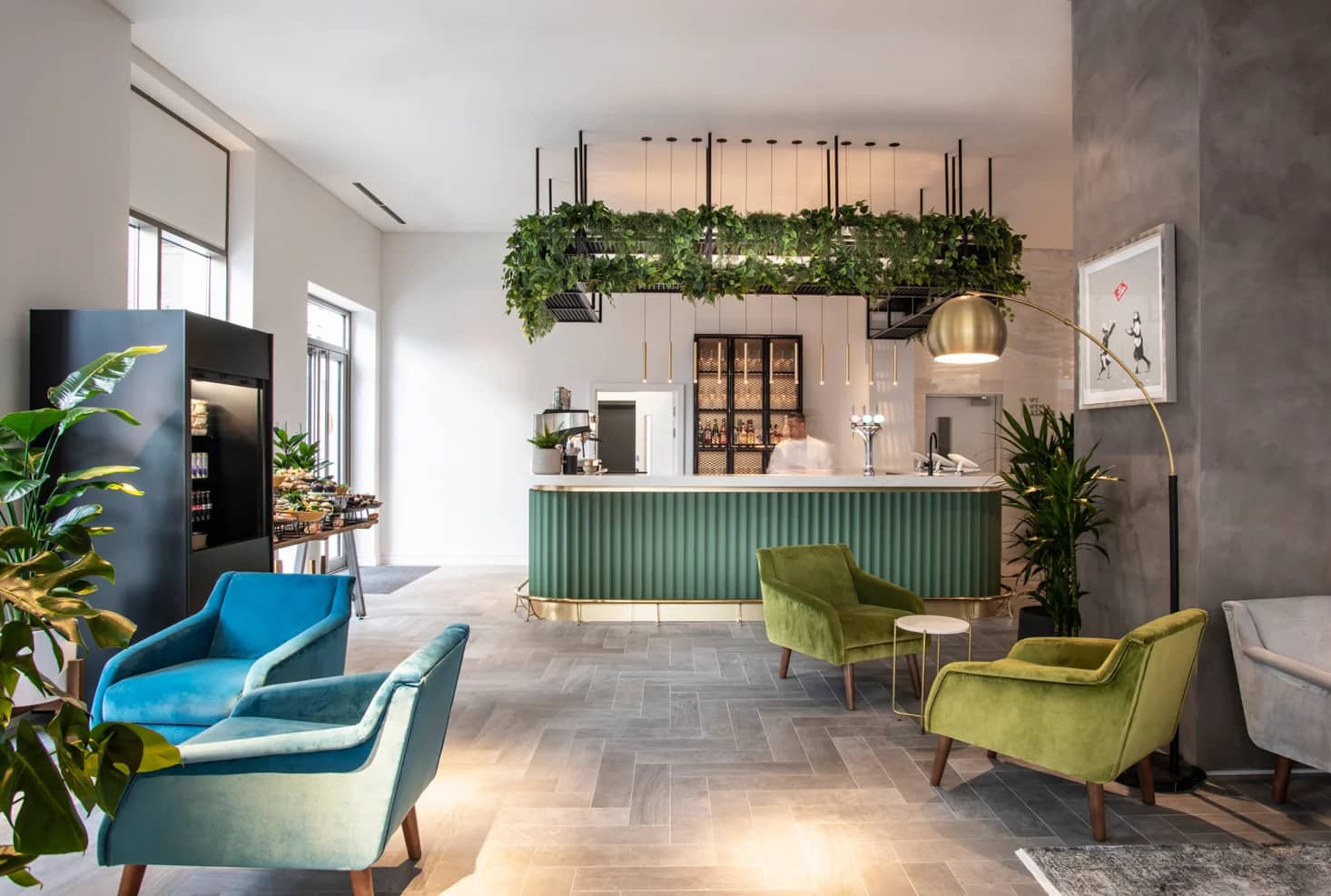
Why Guests Stay Longer: The Psychology of Plants and Space
Plants influence how people feel about the spaces they inhabit, something that we here at Plant Plan have documented extensively…(you can check out our coverage of the science behind planting here) In offices, plants are shown to support productivity and reduce stress. In schools and hospitals, they are linked to better welfare and improved outcomes.
So how do plants influence behaviour in hospitality settings?
Research in hospitality service-scapes has demonstrated that the presence of live planting significantly improves customer satisfaction and loyalty. This effect is driven by the aesthetic appeal of greenery and the feeling of escapism that natural elements provide. This leads to longer guest stay times, as well as the likelihood of their return.
Increasing dwell time
A key term in this research is dwell time.
Dwell time refers to the length of time a guest remains in a space. A higher dwell time has a strong correlation with increased revenue because guests who stay longer are more likely to order additional drinks, explore menu upsells and return for repeat visits.
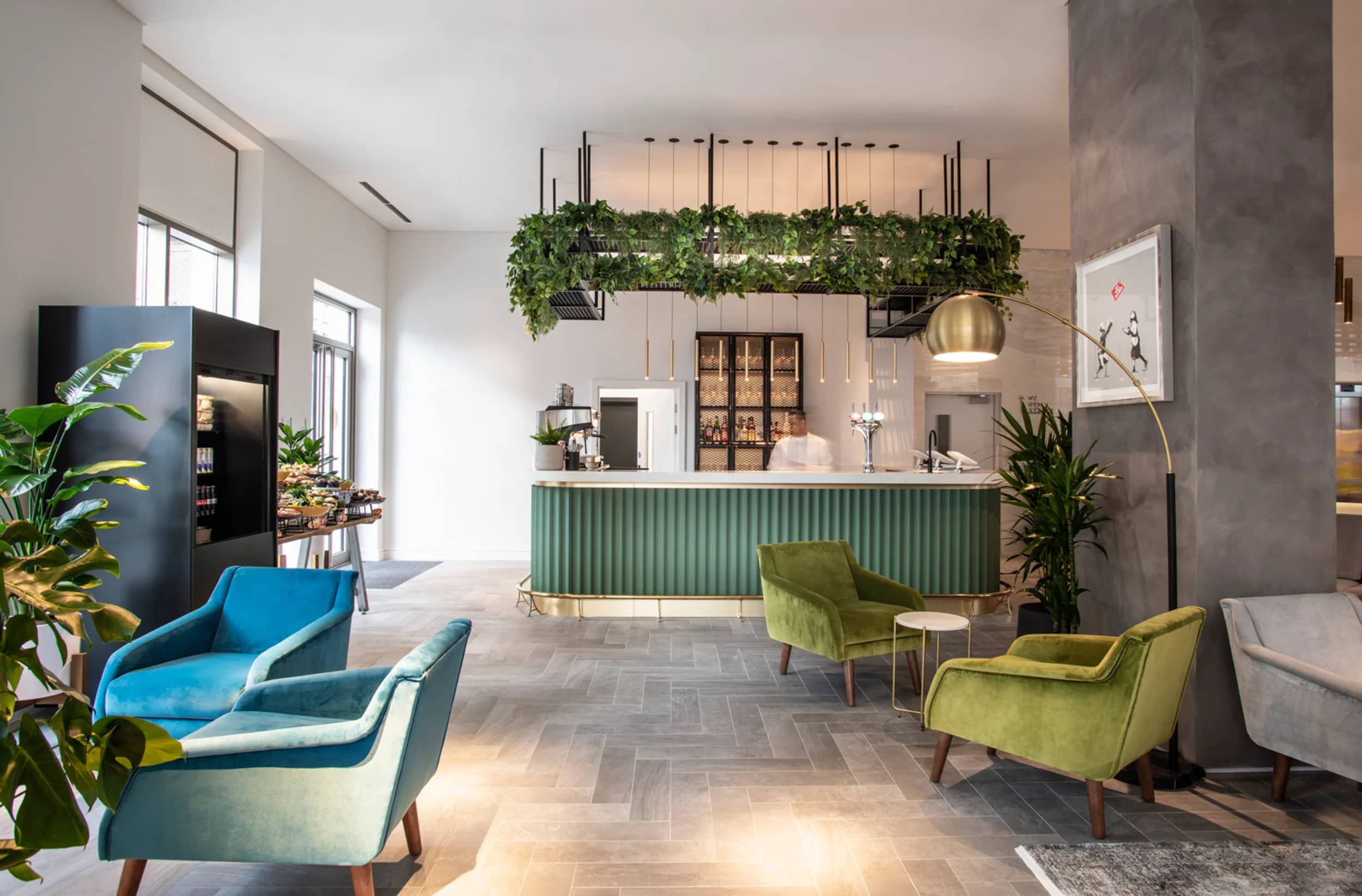
Planting helps create spaces where people genuinely enjoy spending time. Whether through elegant palms in a hotel lobby, soft greenery in a bar seating zone or planting that shapes a more intimate dining area, well placed plants transform hospitality spaces into destinations that guests want to linger in. This naturally increases overall spend and enhances loyalty.
How Plants Encourage Increased Spending
In addition to the time that a punter might spend at the bar, or a family around the dinner table, the way they feel in that space is equally important.
One of the most valuable qualities of planting in hospitality is its ability to encourage relaxation. When guests feel calmer and more at ease, they are far more receptive to additional purchases…
Ordering an extra drink, pushing the boat out on their menu choices, or visiting other areas of the venue, where they might spend a little more money and time, are all possible outcomes of a relaxed customer.
The Importance of a high value hospitality experience
Beyond this, is the perceived value of a hospitality experience. Customers are paying more for what they are recieveing on their plate than they would at home, so they expect the same sort of return from the environment they choose to dine in. The better the space feels, the more comfortable they will be with the cost!
This is supported by the findings of Apaolaza et al., who noted that greenery increases perceived value. When a space feels curated, healthy and visually refined, guests instinctively view it as worth investing in. Plant rich environments elevate the perceived quality of:
Signature cocktails inspired by botanical flavours
Premium lounge seating surrounded by foliage
Garden style dining zones that feel exclusive
Outdoor terraces with lush planting that encourage longer stays
When planting helps create the impression of a high value experience, guests stay longer and spend more (it’s fairly simple we reckon…)
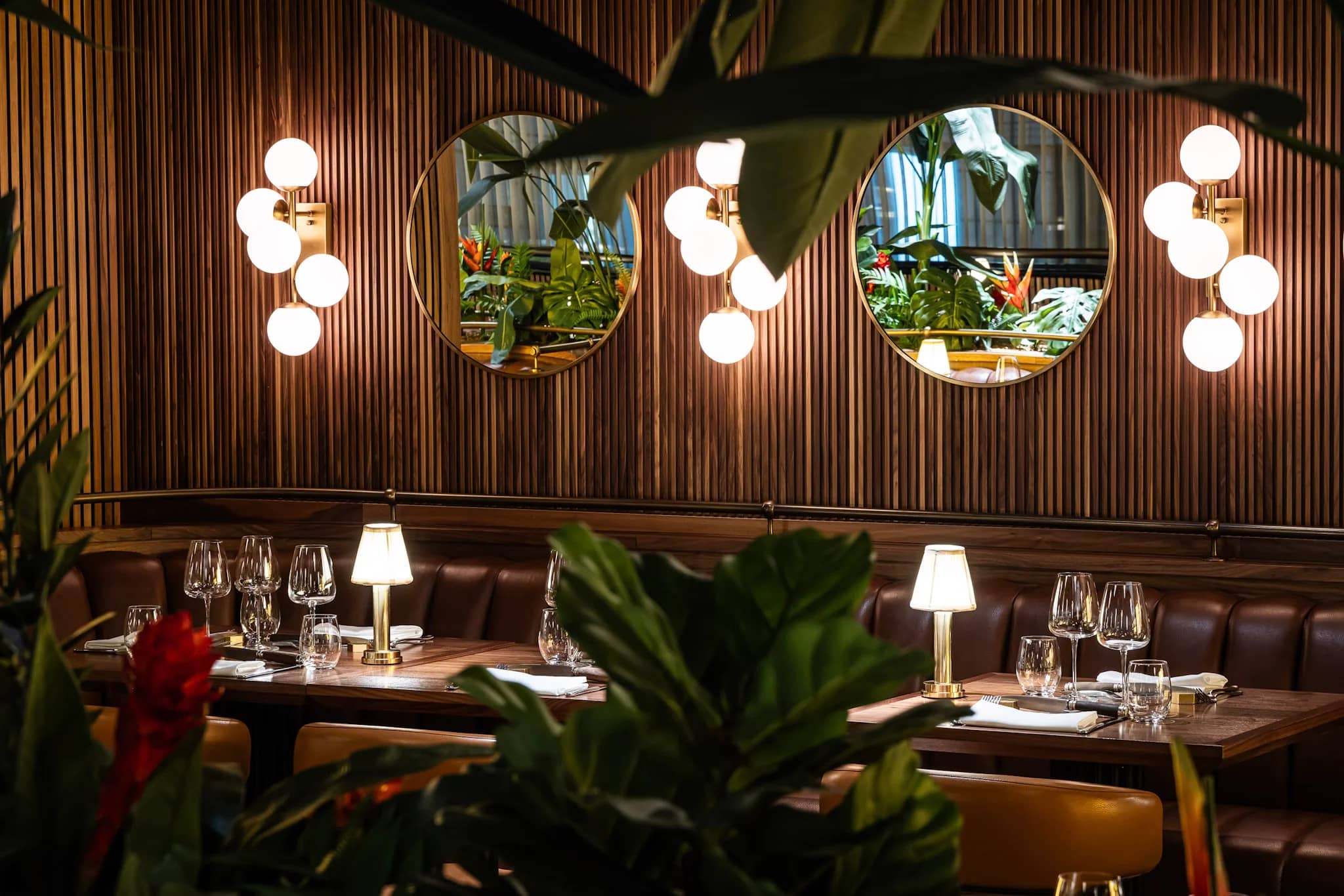
The Role of Biophilic Design in Creating a Welcoming Hospitality Environment
Plants in a hospitality setting do far more than enhance atmosphere. They also bring very real, practical benefits to the interior architecture of a space. Greenery can guide how guests move, where they choose to sit and how long they choose to stay. Planting becomes part of the spatial language of a venue, helping to organise the environment in subtle but powerful ways.
Layered greenery can be used to shape distinct seating zones that feel comfortable and intentional. Living walls soften acoustics and create striking visual moments that guests naturally gravitate towards. Floor standing planters break up large open spaces, making them feel more intimate and inviting. Suspended or trailing plants increase green coverage without compromising valuable floorspace. Even a single indoor tree can act as a focal point that draws the eye, becomes a natural meeting point and encourages guests to capture and share the space.
Thoughtful placement is key. Certain areas benefit most from impactful planting:
Entrance and lobby to shape strong first impressions
Lounge and bar seating to encourage longer dwell times
Dining areas to introduce privacy and intimacy
Transitional spaces to guide movement at a slower, more relaxed pace
Outdoor terraces and rooftop environments to enhance comfort and increase stay time
When nature is integrated in a strategic way, planting does more than decorate a room. It shapes how guests move, rest and spend, turning ordinary hospitality spaces into places people genuinely want to linger in.
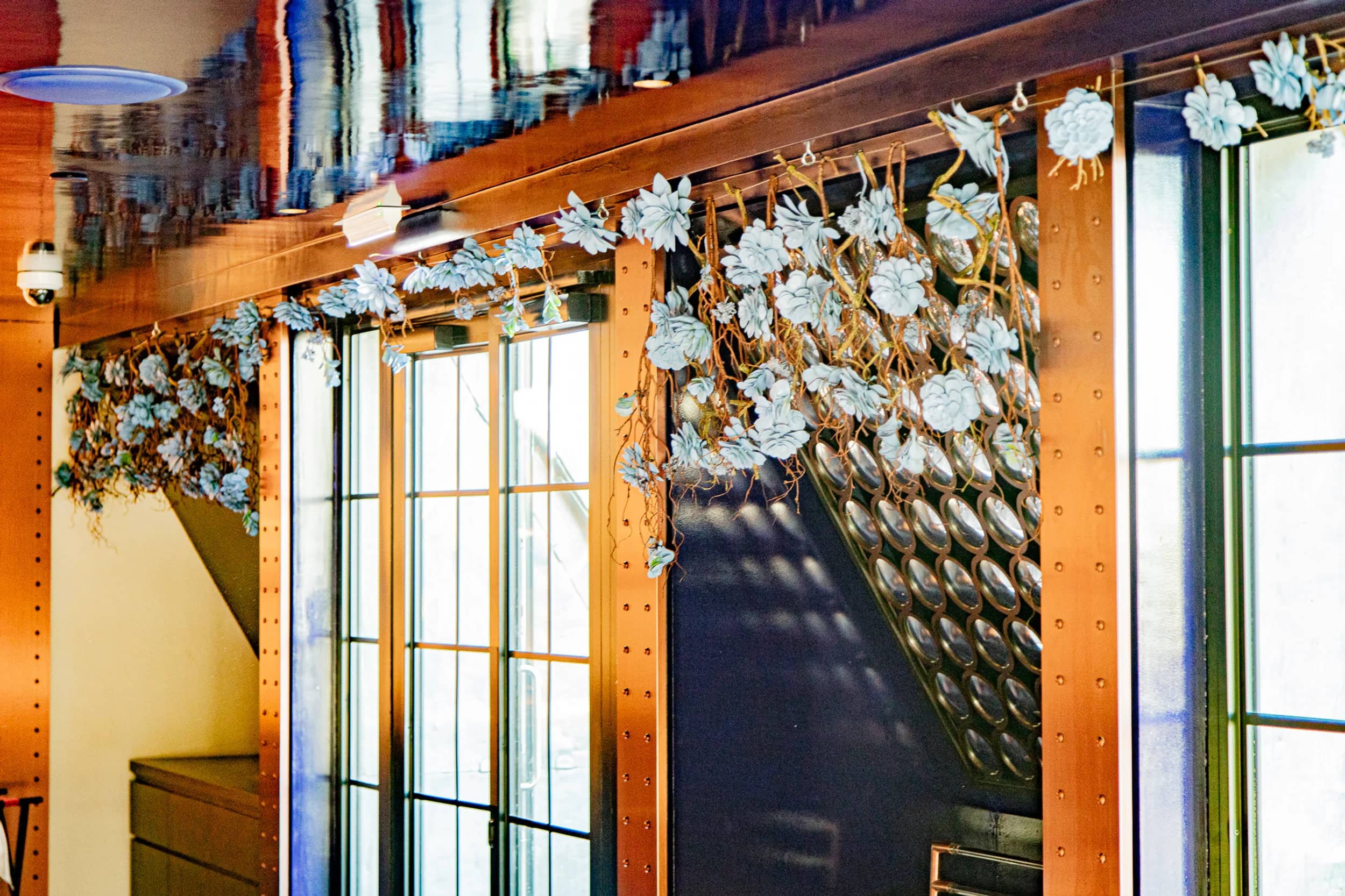
Practical Guide: How to Implement a Plant Strategy in Your Hospitality Venue
Just like the best hospitality experiences, there is no single approach to bringing plan that works for every space.
So how can planting be integrated into a venue in a way that supports both design goals and commercial outcomes?
Step by Step
Audit your space
Identify where guests naturally gather, where ambience feels flat and which zones have the greatest commercial potential.
Define your objectives
Set clear goals, such as increasing dwell time, improving bar spend or elevating brand identity.
Choose plant types that match your brand and environment
A luxury lobby may suit tall palms or sculptural specimens, while a casual dining area may require hardy, low maintenance greenery.
Use plants to shape zones
Planters can introduce privacy, guide movement and slow guest flow, which naturally extends time spent in the space.
Select between live or high quality artificial plants
Live plants bring authenticity and vibrancy. High quality artificial planting is a strong option for low light areas or locations with limited maintenance access.
Establish a maintenance plan
Healthy, thriving plants enhance perception. Declining or poorly maintained plants do the opposite. Partnering with a commercial maintenance provider ensures consistent quality.
Measure results
Track dwell time, average spend, repeat visits and guest sentiment to understand the commercial impact over time.
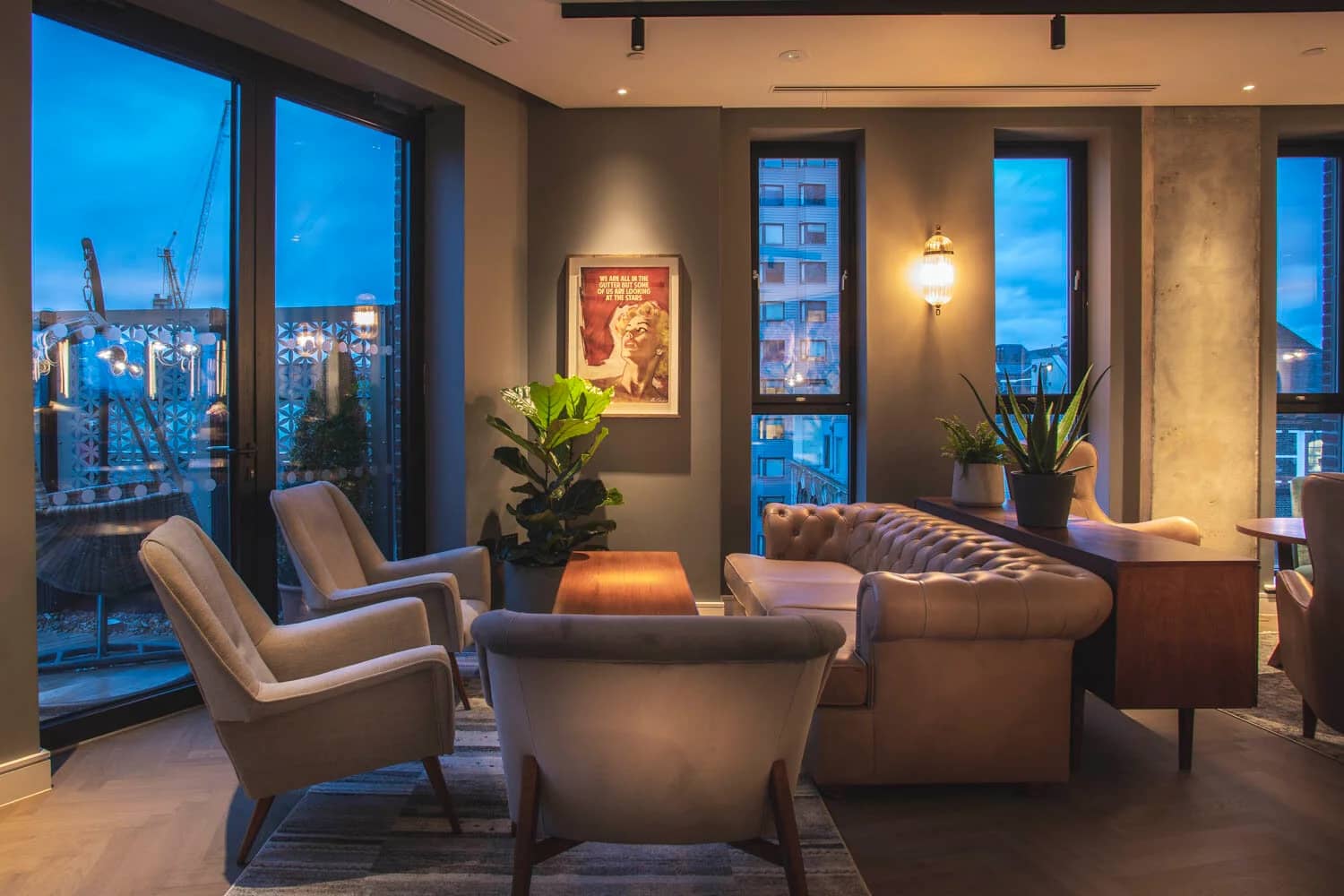
Quick Planting Tips for Hospitality
Use low light tolerant plants for shaded corners.
Incorporate statement pieces for social media opportunities.
Select durable species that handle fluctuating footfall.
Avoid overcluttering with too many plants in small zones.
Link planting with the guest experience such as botanical cocktail menus or seasonally themed displays.
FAQ: Planting in Hospitality Spaces
Yes. Research and industry evidence show that planting increases dwell time which directly leads to higher spend.
Hardy, low maintenance species such as palms, ferns, dracaenas and sansevieria are ideal. Your lighting levels determine the best options.
Absolutely. High quality artificial plants are valuable in low light areas and require no watering or soil management.
Operators often notice changes within weeks. Guests naturally gravitate towards planted zones.
Track dwell time, spend per guest and sentiment before and after installation.
Conclusion: Why Planting Should Be Part of Every Hospitality Strategy
Achieving success in the world of hospitality is not getting any easier…
Social media presence, an ‘instagrammable’ setting and a memorable guest experience are now essential for any venue hoping to stand out in a crowded market. More than ever, enhancing the overall hospitality experience is crucial, and one of the most effective (and we strongly believe cost-efficient) ways to do this, is with plants.
Plants influence how long guests stay, how much they spend and how positively they feel about a venue. When a space feels calming, attractive and distinctive, guests naturally relax, linger and engage more deeply with what the venue has to offer – whatever that may be. This creates meaningful gains in revenue, dwell time and guest loyalty.
If you would like to learn how we here at plant plan, can bring stunning plants into your workspace, head over to our Plants for Restaurants and Hospitality page, Or head over to our contact page.
:format(webp))
:format(webp))
The Best Office Plants for Every Workplace Scenario
Choosing the best office plants isn’t just about looks. The right plants can improve air quality, boost wellbeing, and even increase productivity. Whether your workspace is bright, shaded, large, or compact, there’s a perfect plant for every office environment. In this guide, we explore the best office plants for every situation - from low light to sun-drenched windows and low-maintenance favourites.
:format(webp))